
Guo Xi
Early Spring
早春圖
Scroll to explore
Guo Xi
早春圖
Early Spring was painted in 1072 CE during the reign of Emperor Shenzong and stands as one of the most celebrated works of Chinese art. It is an expansive hanging scroll rendered in ink and pigment on silk. It measures 158.8 by 108.1 centimeters (62.5 by 42.5 inches), which adds to the impressive nature of the work.
The painting depicts the awakening of nature at the cusp of winter and spring. Mist rises through a vast mountain landscape; trees begin to bud; small human figures navigate rocky terrain below the atmospheric peaks.
Early Spring (早春圖) · Guo Xi · 1072 CE
National Palace Museum, Taipei. Click to enlarge.
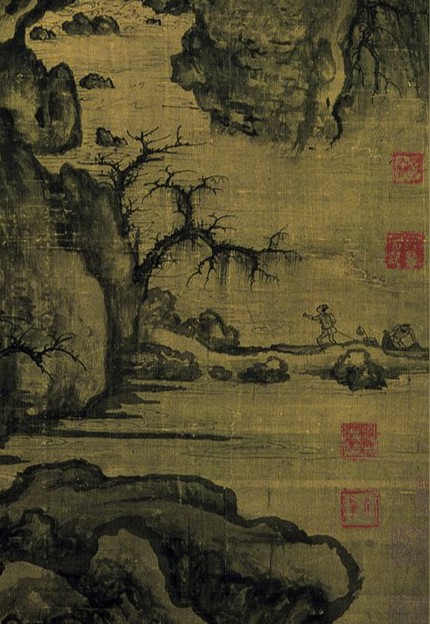
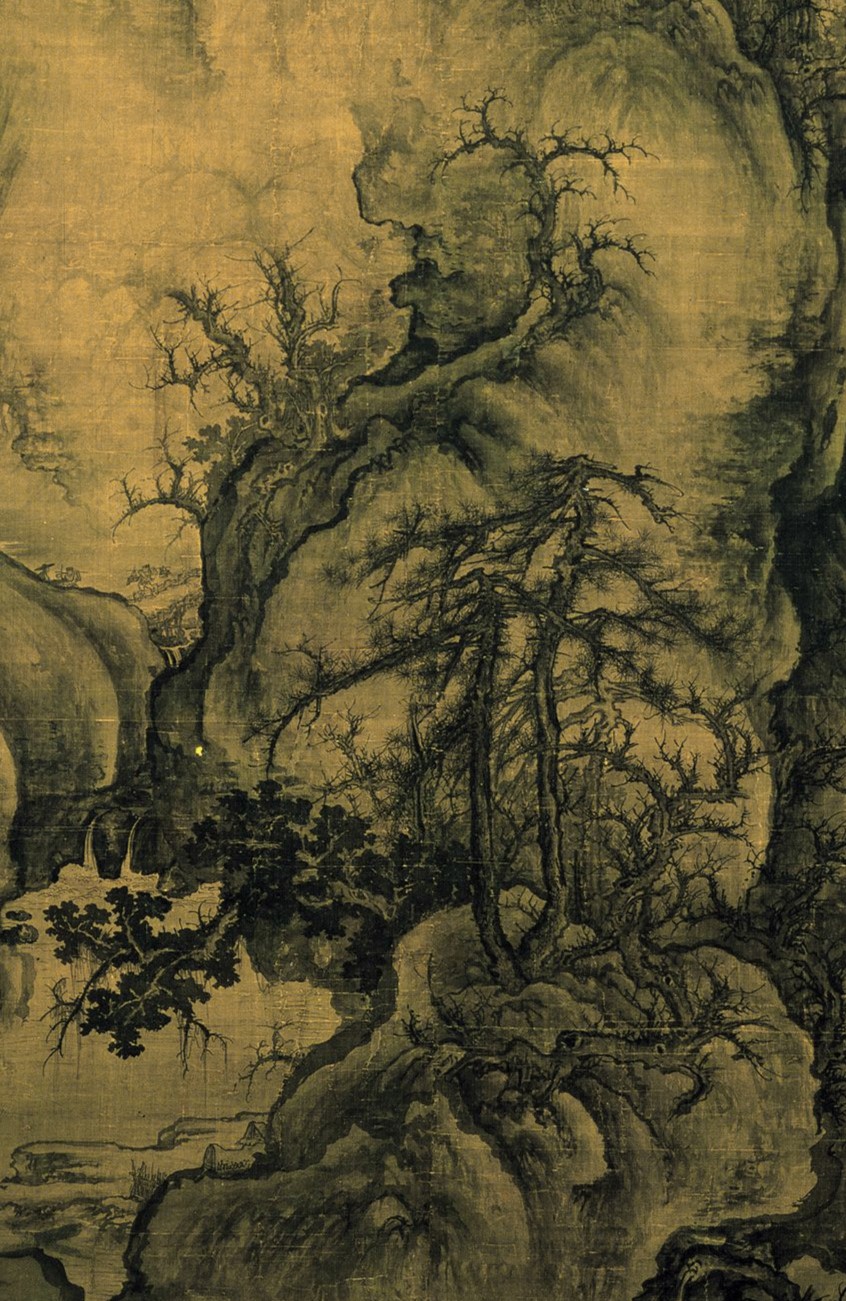
The composition has three sections, each separated by layers of mist. In the foreground, rocky outcrops and gnarly trees anchor the viewer in the varied terrain. Several figures and various homes throughout the piece establish a human scale against the overwhelming grandeur of the piece’s landscape
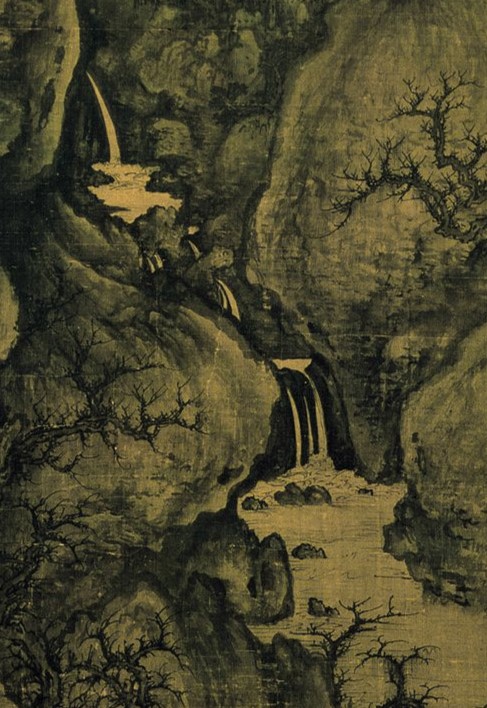
The center of the piece has steep cliffs and a waterfall descending through the fog. Sitting amongst the rock face is a secluded retreat, a place for contemplation away from society.
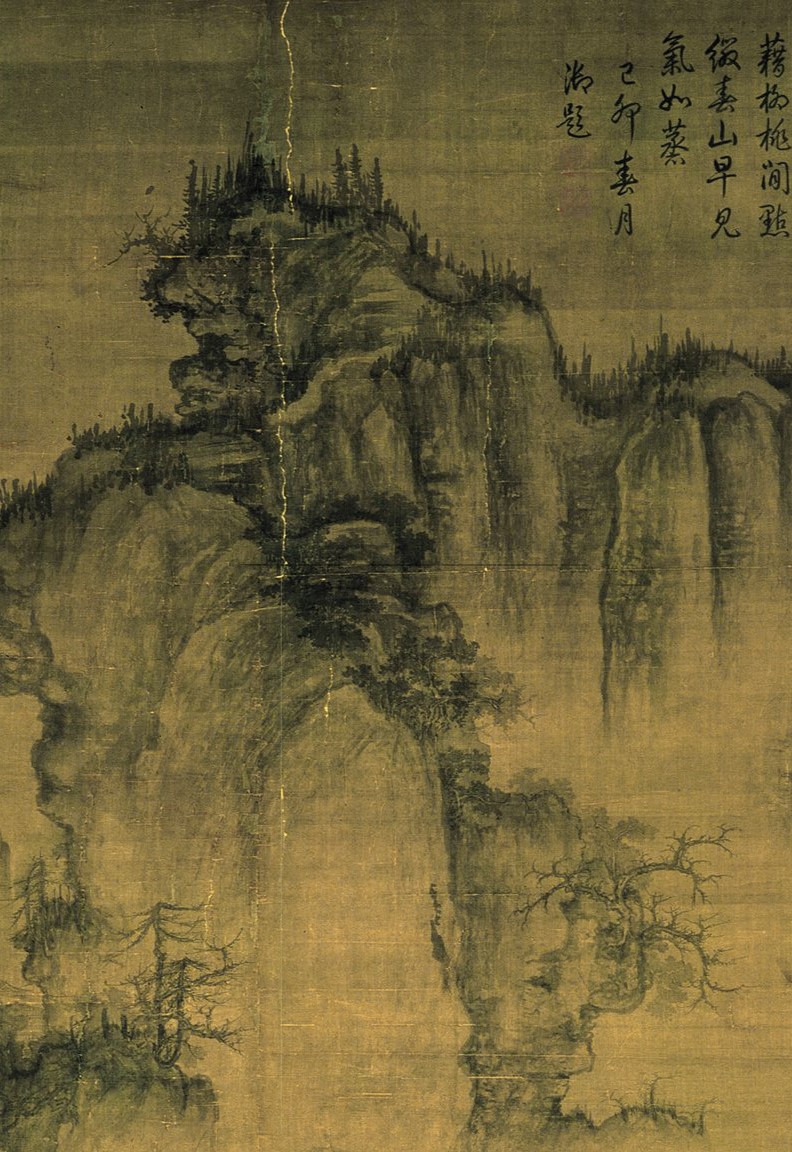
The uppermost peaks dissolve into the haze and fog, their forms merely suggested. This incompleteness was a part of the Song aesthetic philosophy; what the brush leaves unsaid is as vital as what it records. The mountain's summit is not fully resolved; it exists in a state of perpetual becoming.
An inscription in Guo Xi's own hand, dated to the year of completion, appears in the upper right corner alongside the accumulated seals of later collectors and emperors who recognized the work's singular importance across nine centuries.
Detail: upper peaks emerging from mist
c. 1020 – c. 1090 CE
Guo Xi was born in Wenxian, in the Henan Province, and became a prominent court painter of the Song Dynasty. Emperor Shenzhong appointed Xi to the Imperial Painting Academy with the title "Painter In Attendence", the highest rank within the court's artistic hierarchy. This position gave him the resources and mandate to produce his monumental works.
What separated Guo Xi from other painters of the time is his approach to art; he viewed it as an intellectual and spiritual discipline rather than a decorative practice. He traveled through China's vast mountain regions, observing the emotional effects of the weather, light, and seasons, and how a painter might illustrate those states into a singular piece.
After his death, his son, Guo Si, compiled his treatise, The Lofty Message of Forests and Streams (林泉高致, Linquan Gaozhi), one of the foundational texts of Chinese aesthetic philosophy.
Guo Xi codified the Three Distances (三遠, sānyuǎn), a form of multi-point perspective that creates an illustration where 3 distinct distances are present in one frame. This differs from the Western single-point perspective, where you are severely limited by vantage point and can't achieve the same spatial experience.
高遠 · gāo yuǎn
深遠 · shēn yuǎn
平遠 · píng yuǎn
Close examination reveals the extraordinary range of Guo Xi's technique, different sections of the painting, use various brushstrokes and tonalities to create depth and atmosphere whilst preserving minute details.
Guo Xi completes Early Spring for the Northern Song imperial court of Emperor Shenzong
Fall of the Northern Song capital; the work enters the Southern Song imperial collection at Hangzhou
Yuan Dynasty scholar-painters study Guo Xi's technique as a canonical model of the northern landscape tradition
Emperor Qianlong adds colophons and seals, marking it among the dynasty's greatest treasures
Transferred to the National Palace Museum, traveling with the broader imperial collection
Permanently housed at the National Palace Museum, Taipei.
